Increasing commercialization effectiveness for healthcare technology
Your Medical Technology Works. Now Let's Get the Market to Adopt It.
Regulatory clearance and a strong product do not guarantee commercial growth. When customer adoption is slow, sales cycles drag, and revenue falls short, the problem may be the commercialization strategy connecting your innovation to the customer. Int'l Commercialization Growth Partners identifies what is blocking adoption and builds the strategy and execution needed to drive sustainable growth.
Find What's Blocking Your Growth →Stellar Business AwardsBest Healthcare & Medical Technology Consulting in the United States - 2025
















Does Any of This Sound Familiar?
Your technology works, but…
-
Customers aren't adopting it as quickly as expected.
-
Your sales team is working harder without enough growth.
-
Prospects show interest but deals keep stalling.
-
Sales cycles are longer than they should be.
-
You're spending more to acquire each customer.
-
Investors or the board are asking when growth will accelerate.
If so, simply pushing the sales team harder usually doesn't solve the problem. Because a sales problem, isn't always a sales problem.

Slow Adoption Gets Expensive Fast.
Every month your technology struggles to gain traction can cost you more than this quarter's revenue.
- Runway
- Market share
- Investor confidence
- Valuation
- Sales team morale
- Time
- Competitive advantage
Because while you're trying to figure out why customers aren't adopting, the market keeps moving.
The Bridge Audit™
Assessing the Ten components. One outcome.
Every one of them feeds adoption. Any one of them can stop it — and most teams can name an owner for three.
Each has a single accountable owner in a healthy company.
Market Research
Who the buyer really is, and the reason they actually switch.
Product Development & Design
Whether what's being built is what the market will adopt.
Regulatory
Approval sequencing planned against the commercial timeline.
Production
Whether you can deliver at the scale you're selling at.
Marketing & Branding
Messaging that changes how a physician frames the problem.
Selling
A documented motion a new rep can reach quota on.
Financing & Budgets
The fully-loaded cost of every newly adopted account.
Partnerships & Alliances
Channel producing adoption, not just coverage.
Customer Support & Service
Service designed to drive re-order and expansion.
Post-Market Analysis
Real-world data fed back into positioning and pricing.
What it's costing
Put your numbers on the line. The distance is the diagnosis.
Three benchmarks a healthcare technology board underwrites, fixed. Drag each handle to where your company actually sits.
Outside every benchmark a board underwrites. Each one on its own is survivable. Together they describe a commercial system that is being brute-forced rather than working.
Benchmarks are a standard to measure against — not a promise.
How this works
Find the Real Constraint Before Spending More Money Trying to Fix It.
The Bridge Audit™ examines the entire commercialization system surrounding your technology, not just sales. We identify where customer adoption is breaking down and what needs to happen.
-
Uncover
Where is growth actually getting stuck?
-
Identify
Which part of the commercialization system is creating the constraint?
-
Diagnose
What is it costing you in revenue, adoption, time, and opportunity?
-
Eradicate
Remove the processes, assumptions, and strategies holding growth back.
-
Cure
Build the commercial strategy and execution required to accelerate adoption.
No guessing. No generic sales training. No treating symptoms while ignoring the cause.
Services
Five practice areas. Scoped against the diagnosis.
Most engagements draw on two or three. Which ones is an output of the Bridge Audit™, not a conversation about packages.
01 Commercialization strategy
The blueprint — built for your goals and resources.
02 Sales effectiveness
Turning wins that depend on individuals into a motion a new rep can run.
03 Product launch
Commercial readiness before you go, and adoption after.
04 Commercial execution
The part that ends at a PowerPoint everywhere else.
05 Fractional executive leadership
An experienced commercial executive running the function now.
Proof
The people who can validate what Craig T. Ingram has accomplished for companies.
Craig is an outstanding sales professional and a great person. He is an over-achiever; detail oriented; has excellent interpersonal skills and was consistently above his sales quota while at SurgRx. I would highly recommend Craig and would love to hire him again.
 David RenziSenior Vice President, Sales Pulmonx Corporation
 A Consultant, Mentor, Leader and experienced Sales Representative. Craig takes the hands on approach to work with your team and dives deep into the technical aspects of the products. I would highly recommend him.
 Joel RussoDirector of Sales (former) Microline Surgical, Inc.
 Craig is loyal, honest, and a true disruptor. I had the opportunity to work on the same team as Craig from 2022–2023 at Avel eCare. From our time together it is clear that Craig is not afraid to think outside of the box. You can always count on him to speak his mind, challenge the status quo, and work with you to come up with new ideas and strategies — all while maintaining a high level of integrity and collaborative spirit. I recommend Craig to those who are not afraid to do things differently to drive commercial growth.
 Melanie HuenBusiness Development & Channel Partnerships Hello Heart
 Craig was my sales trainer and Consultant. His leadership and guidance allowed me to grow both personally and professionally. I will be forever grateful.
 Larry Anderson, Jr.Vice President — Commercial & Strategic Initiatives BG Medical
 Craig came to Vivify Health and had an immediate impact with his work ethic and enthusiasm. He was a complete self starter and didn't wait for the marketing department to bring him leads. I was really impressed with his "outside the box" thinking related to lead generation. We were happy to let him try different ideas as we were all digging for as many ways we could find to build pipeline. The best part was the effect his efforts had on his fellow sales people — the entire team started thinking and sharing new ideas. Love working with people who break the mold and Craig is definitely one of those guys. If you're looking to reenergize your team this guy would be a great person to bring in.
 Michael E. BanesseVice President of Commercial Sales BETTRAI
 Most of the medtech world has a very basic understanding of what constitutes commercialisation. In my experience it is a multi-complex approach from day one of a company — not setting a sales target at launch. Craig has literally written the book on this approach to solid and serious, long-term strategic medtech commercialisation. If you want long-term (but hard work) and sustainable commercialisation of a MedTech device, then you should reach out to Craig and have him build your strategy — no, not a sales plan — but a deep ten-pillar strategy for how to commercialise your product.
 Steve BellNon-Executive Director, Board Advisor & Investor Surgical Robotics & MedTech
 Who you'd be talking to
Not an associate; But an authority in highly effective commercial strategy
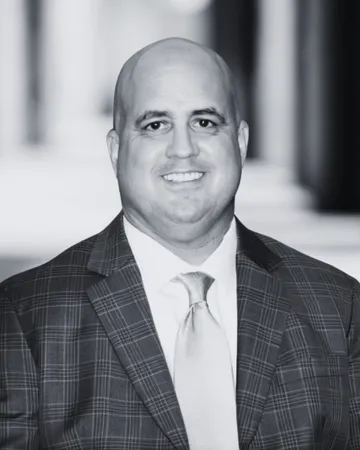
Craig T. Ingram, MBA, CBT
Co-founder · Chief Commercialization & Strategy Advisor
Craig started selling medical devices while still at university and built a distribution company doing it. Spending almost a decade at Ethicon, a surgical division of Johnson & Johnson's followed by commercial leadership at VC-backed startups including SurgRx, Inc. (Acquired by Johnson & Johnson), Patton Surgical Corporation (Acquired by Stryker Endoscopy), Microline Surgical, Inc. (Acquired by Hoya Ltd.), Suture Ease, Inc., Minerva Surgical, Inc., etc.
Since 2007 he has worked almost exclusively as a trusted advisor to CEOs of venture and family-office-backed medical technology companies: launches, expansion into virgin territories, and the unglamorous work of turning a promising product into repeatable adoption.
Before you book
Eleven questions. Pick the one that's stopping you.
01 What types of companies do you work with?
We work with medical device, biopharma, and digital health and software companies that want to improve their effectiveness in commercial strategy, go-to-market execution, and overall commercialization.
02 What does “commercialization effectiveness” mean?
It means making sure your commercial strategy is not only well designed, but also practical, aligned to the market, and capable of producing measurable customer purchase and adoption results.
03 How do you help healthcare technology companies move from strategy to tactical execution?
We identify the gaps between the plan and the actual execution, then help prioritize the key performance activities, emotional persuasion messaging, sales processes, and team alignment needed to improve performance.
04 What does GTM tactical execution support include?
It can include market entry and product launch planning, segmentation, messaging, sales enablement, marketing “pull” execution, field alignment, and performance improvement across the commercial engine.
05 Do you work with early-stage companies or only established ones?
We support both. Early-stage companies often need help building a credible commercialization plan — for securing investment capital and for market entry — while more established companies usually need help improving execution and scaling more effectively.
06 How is your advisory approach different from traditional consulting?
Our focus is on practical commercial effectiveness, not just recommendations. We aim to provide actionable advice that leadership teams can use immediately to improve results, using our proprietary 5-Point Framework for uncommon customer adoption.
07 Do you work with medical device, biopharma, and digital health companies?
Yes. We advise across these sectors and adapt our approach based on the regulatory environment, buying process, clinical adoption dynamics, and market access requirements.
08 Can you help if our strategy is already defined but results are underperforming?
Yes. Many companies already have a strategy but need help diagnosing why execution is lagging or failing to reach the expected revenue outcomes, where the commercial model is breaking down, and what to change first. We call it the Kryptonite effect.
09 What does a typical engagement look like?
Engagements are tailored to the client’s needs, and usually involve an initial assessment, targeted advisory sessions, strategic and tactical recommendations, and ongoing hands-on support as needed.
10 How do you measure commercial effectiveness?
We look at whether the strategy is translating into clearer priorities, stronger execution, better alignment, and improved commercial outcomes — prospect-to-customer conversion, repeatable customer adoption and usage, pipeline interest, and revenue performance.
11 How many days or hours per month is usually needed?
We want the client to spend as little as possible to get the results they need. Most of the time it is three to five days per month — especially where we are acting as a company’s fractional executive. Keeping the burn rate low is part of the job.
The next step
Fifteen minutes. One question answered.
Whether what's slowing your adoption is something structural, and if it is, roughly where it lives.
What happens
- Craig reads your situation beforehand
- You describe what's happening; he asks a lot of questions
- You get his honest read on the likely root cause
- If there's a fit you'll both know. If not, he'll say so
What it isn't
- A capabilities deck
- A proposal you didn't ask for
- A junior associate running discovery
- Something that turns into a 60-minute call
Prefer email? clientsupport@medicalsalesgrowth.com · +1 551-697-7320